

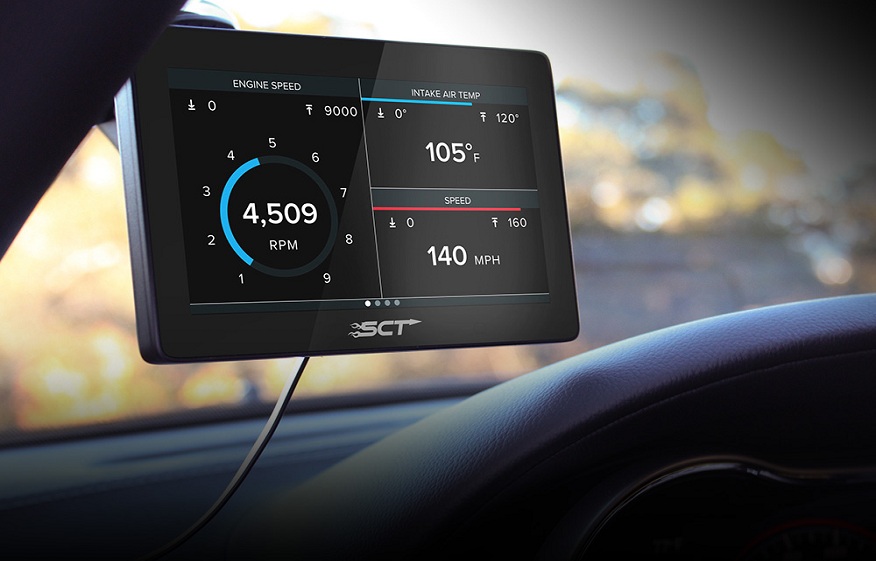
A truck that spends most of its time commuting can often benefit from a simple maintenance refresh or modest bolt-on part. Work trucks face a different set of demands. Towing a trailer through mountain grades, carrying equipment during a hot summer week, or hauling heavier loads for a growing business can expose the limits of a factory calibration.
When the truck feels sluggish under load, shifts harshly, or delivers inconsistent fuel economy, the solution may involve more than replacing a single component. A properly selected performance tuner can help adjust the truck’s operating strategy to better match its actual workload. The goal is not maximum power at any cost. It is a more usable balance of power, drivability, efficiency, and mechanical responsibility.
Read More: Essential Winter Preparedness: CPAP Battery Backup Systems
Recognizing When a Basic Upgrade Is No Longer Enough
A cold-air intake, exhaust component, or replacement turbocharger may improve one part of the system, but modern trucks depend on several systems working together. Fuel delivery, air volume, throttle response, transmission behavior, and engine protection settings all influence how the vehicle performs.
Common signs of a calibration problem
Business owners and independent operators may notice several warning signs:
- The truck loses speed quickly on hills while towing.
- Throttle response feels delayed or unpredictable.
- The transmission hunts between gears with a trailer attached.
- Fuel economy changes significantly between similar work routes.
- The engine performs well unloaded but feels strained when carrying equipment.
- A recent hardware upgrade has not produced the expected improvement.
These symptoms do not automatically mean the truck needs an aggressive tune. They may indicate that the current calibration is not suited to the vehicle’s modifications or operating conditions. A tuner can provide a way to make controlled adjustments rather than adding parts without addressing how the truck manages them.
Matching Performance Changes to the Truck’s Real Work
The right setup depends on how the truck is used. A landscaping company carrying tools around town has different needs than a contractor towing a skid steer across the state. A long-haul driver may prioritize steady cruising and fuel control, while a recreational owner may want sharper response for occasional towing.
Before choosing a sct tuner, identify the truck’s primary job and the conditions it faces most often. Consider its engine and transmission configuration, current modifications, typical trailer weight, and the terrain covered during a normal week. A calibration designed for an unloaded daily driver may not be appropriate for repeated heavy towing.
Towing demands deserve special attention
More power can be useful, but towing performance also depends on manageable torque delivery. An abrupt increase in low-speed torque can place additional stress on the transmission, drivetrain, and tires. For a work truck, a smooth power curve may be more valuable than a peak dyno number because it helps the driver maintain control and reduces unnecessary shifting.
Temperature management is another practical concern. Long grades in warm weather can push coolant, oil, and transmission temperatures higher than expected. A responsible performance strategy should account for those conditions rather than treating a short acceleration run as the primary measure of success.
The Cost of the Wrong Performance Strategy
An inexpensive modification can become costly if it creates drivability problems or accelerates wear. Poorly matched changes may lead to excessive smoke, harsh shifts, overheating, reduced reliability, or repeated diagnostic issues. Downtime is especially expensive for a business vehicle because the lost work can exceed the price of the original upgrade.
Read More: Why Buy 2024 Corolla Cross L FWD?
That is why truck owners should treat tuning as part of a complete performance plan. Verify compatibility before installation, keep records of existing modifications, and make changes gradually when possible. It is also sensible to monitor temperatures, fuel economy, and driving behavior after the adjustment instead of judging the result solely by how quickly the truck accelerates.
A More Useful Definition of Performance
For a work truck, performance means completing the job with less strain and more predictable control. The best upgrade may be the one that improves hill-climbing, reduces gear hunting, and makes a loaded truck easier to drive throughout a demanding season.
A carefully matched tuner cannot replace maintenance or correct a failing mechanical component. It can, however, help align the vehicle’s electronic controls with its hardware and workload. That makes it a practical next step when basic upgrades no longer address the way the truck is actually being used.